About S.L.E.S (Sodium Lauryl Ether Sulfate)
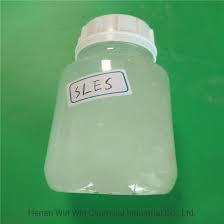
S.L.E.S (Sodium Lauryl Ether Sulfate)
- SLS is whats known as a surfactant. This means it lowers the surface tension between ingredients, which is why it's used as a cleansing and foaming agent.
- Most concerns about SLS stem from the fact that it can be found in beauty and self-care products as well as in household cleaners.
- Sodium laureth sulfate (SLES) is a surfactant with a similar chemical formula. However, SLES is milder and less irritating than SLS.
Versatile Surfactant for Multiple ApplicationsS.L.E.S is a staple ingredient in a broad range of products, spanning personal care items like shampoos and hand soaps, to household and industrial cleaners. Its excellent foaming and cleansing capabilities make it ideal for both personal and commercial formulations, offering efficacy and consistency in every batch.
Superior Foaming and EmulsificationRenowned for its high foaming ability, S.L.E.S ensures thick, stable lather and efficient emulsification, crucial in detergents and dishwashing products. Its compatibility with other anionic, non-ionic, and amphoteric surfactants allows for versatile formulation options, optimizing the performance of end-use products.
Safe Handling and Storage RecommendationsTo maintain its quality, S.L.E.S should be stored in a cool, dry place, away from direct sunlight and acids. Though non-toxic and not poisonous, it is classified as an eye irritant; proper safety precautions, including the use of gloves and eye protection, are recommended during handling and processing.
FAQ's of S.L.E.S (Sodium Lauryl Ether Sulfate):
Q: What is S.L.E.S and how is it typically used in formulations?
A: S.L.E.S (Sodium Lauryl Ether Sulfate) is an anionic surfactant used for its excellent foaming, cleaning, and emulsifying properties. It is commonly incorporated into shampoos, hand washes, dishwashing liquids, car wash detergents, textile cleaning, and various industrial cleaners as a primary or secondary surfactant.
Q: How should S.L.E.S be stored to maintain its effectiveness?
A: S.L.E.S should be stored in a cool, dry location, protected from sunlight and acids. Ensure the storage environment is well-ventilated. Keep containers sealed when not in use to preserve product quality and extend shelf life.
Q: What are the main benefits of using S.L.E.S in cleaning and personal care products?
A: Products containing S.L.E.S benefit from its strong cleaning and foaming abilities, mild characteristic odor, and excellent compatibility with other surfactants. Being biodegradable, it is environmentally considerate while delivering effective performance in various applications.
Q: When should different concentrations of S.L.E.S be used in formulations?
A: The appropriate concentration of S.L.E.S (282% or 702%) depends on the specific formulation and end-use application. Lower concentrations are often used for direct incorporation, while higher concentrations are suited for bulk supply and dilution according to formulation requirements.
Q: Is S.L.E.S safe for use, and are there any precautions during handling?
A: While S.L.E.S is non-toxic and not classified as poisonous, it can irritate the eyes. Appropriate precautions, such as wearing gloves and protective eyewear, are recommended during handling. Follow local safety standards for industrial chemicals.
Q: What is the process of incorporating S.L.E.S into industrial formulations?
A: S.L.E.S is generally blended during the aqueous phase of formulation. It dissolves easily in water and can be mixed with other surfactants and additives to achieve the desired product characteristics, such as viscosity and foaming level.
Q: Where is S.L.E.S sourced and how is it supplied?
A: S.L.E.S is supplied by manufacturers and traders throughout India, commonly packed in drums or IBCs with net weights of 170kg, 220kg, or 1000kg. Each batch conforms to manufacturers' specifications and is accompanied by standard documentation upon delivery.

 Send Inquiry



 Send Inquiry


 Send Inquiry
 English
 Spanish
 French
 German
 Italian
 Chinese (Simplified)
 Japanese
 Korean
 Arabic
 Portuguese